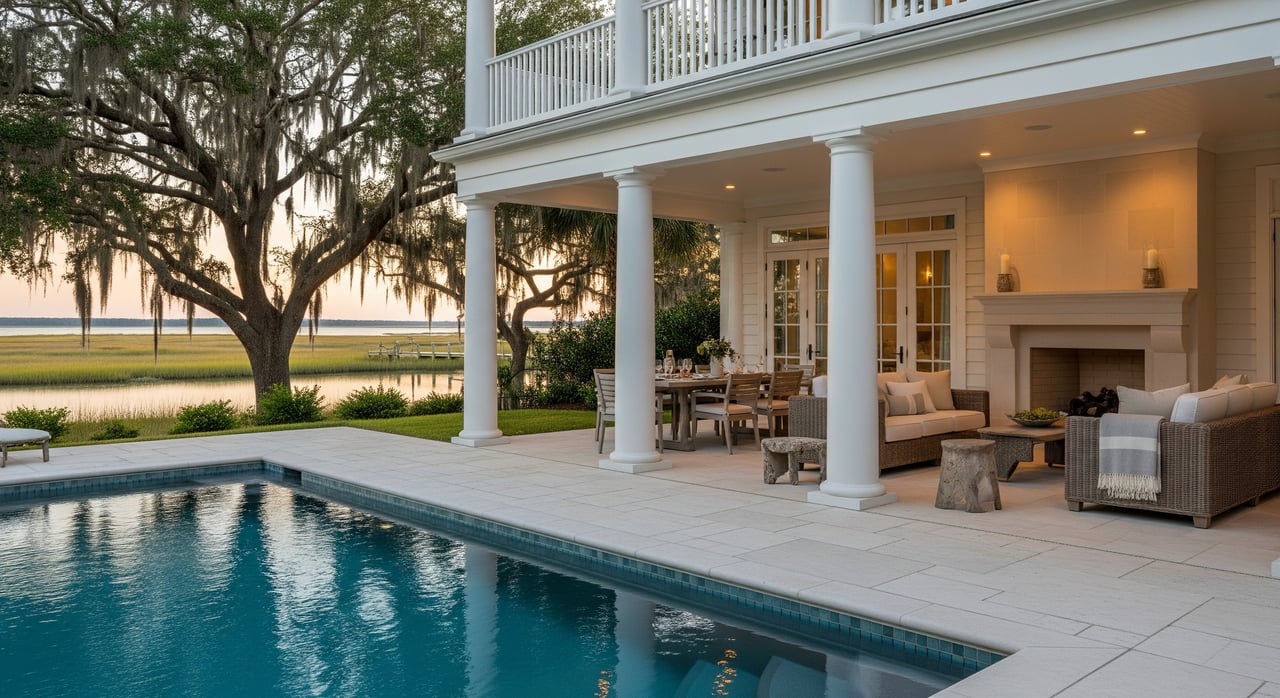
Planning a pool, summer kitchen, or screened veranda in Berkeley Hall can feel exciting and overwhelming at the same time. You want a space that looks effortless, works in our Lowcountry climate, and protects your views of the Fazio course or the river. In this guide, you’ll learn how to plan outdoor living that balances comfort, compliance, and long-term value in Bluffton’s coastal environment. Let’s dive in.
Plan around climate first
Bluffton’s humid subtropical climate means long outdoor seasons with hot, humid summers and mild winters. Shade, airflow, and moisture management are not optional. They define how comfortable your porch, deck, or pool will feel from April through October.
According to NOAA climate resources, hurricane and tropical systems can affect the area from June through November. That seasonal risk influences roof connections, screen choices, and how you protect outdoor kitchens and pool equipment. Build for everyday comfort and be ready for storm events in the same plan.
Respect flood and site realities
Flood risk in the Lowcountry varies from lot to lot. Before you pick a pool location or draw a veranda footprint, confirm your flood zone and base flood elevation on the FEMA Flood Map Service Center. If your property sits in a flood-prone area, raising the finished floor of a porch and elevating equipment pads can reduce damage and downtime after a storm.
Berkeley Hall parcels often feature strong view corridors and heritage trees. Work with existing grades and canopy to preserve sightlines and avoid costly fill. For permits, setbacks, and inspections, start with Beaufort County building and permitting. If your property uses a septic system, pool placement and summer kitchen utilities must respect drainfield setbacks.
Verandas that frame the view
Your veranda is the stage for Lowcountry living. Place it to capture golf fairway or river vistas without blocking the view with heavy columns or tall railings. Where lots are lower or closer to water, a slightly elevated porch can both enhance views and address flood considerations.
Screened or glazed enclosure
Screened porches are ideal for summer airflow and insect control. They keep the breeze moving while giving you a flexible, shaded room for daily use. Glazed enclosures can extend shoulder-season use but may need HVAC or humidity control, and they can trigger different permit and review requirements. Always confirm community Architectural Review Board expectations before you finalize materials and enclosures.
Structure, moisture, and storm prep
Use engineered connections for roofs and columns to meet wind requirements commonly considered in coastal settings. Choose moisture-tolerant materials and ventilated floors and ceilings to reduce rot and mildew in our humid climate. Removable or hurricane-rated screens or shutters can help you secure the space ahead of storms while preserving everyday airflow the rest of the year.
Smart, durable summer kitchens
A well-placed summer kitchen turns your veranda into an all-season entertaining hub. Position it to avoid smoke drifting into the main living areas and to keep appliances shaded. Plan for overhead venting or an open-air layout that lets heat and smoke rise and dissipate.
For longevity near salt air, specify corrosion-resistant materials. Marine-grade stainless steel, powder-coated metals, and composite counters hold up better than standard finishes. Where budget allows, 316 stainless is the gold standard for grills and cabinetry in coastal environments. Gas lines, electrical runs, and plumbing should be permitted and handled by licensed professionals in line with county code.
Pools with purpose and resilience
Pools are both lifestyle amenities and visual centerpieces. Site yours to frame the Fazio fairway or river panorama while respecting neighbor privacy and view corridors. In general, choose higher, well-draining locations on the lot and keep clear of septic fields and utility easements.
Safety matters. Expect permit requirements, pool barrier standards, and electrical rules enforced by the county. Equip fencing with self-latching gates and consider alarms or covers where required. For storm resilience, design overflow and filtration to handle debris, and elevate pumps and equipment pads above expected flood levels.
Screens, storm protection, and insects
Screening is your friend in the Lowcountry. Standard insect screens protect comfort while maximizing airflow. Retractable systems let you preserve open views when bugs are light and deploy screens when mosquitoes are active.
For storm readiness, some owners add hurricane-rated screen systems or shutters to protect enclosures and furnishings. Frame components should be marine-grade or coated aluminum, and mesh panels should be designed for easy replacement. For mosquito control, remove standing water, choose strategic landscaping, and follow local guidance. The Clemson Extension offers region-specific tips on landscaping and pest management that pair well with outdoor living plans.
Landscape and stormwater that work together
Use native, salt-tolerant, and low-maintenance plantings to define rooms, add privacy, and reduce irrigation needs. Preserve canopy trees that frame views, and assess root zones before any pool excavation to protect mature live oaks. Grading should move water away from structures and into approved drainage features to protect foundations and neighboring properties.
If your project is near regulated wetlands or tidal areas, additional reviews can apply. For environmental and public health requirements that may affect stormwater, septic, or pesticide use, consult South Carolina DHEC.
Your permit and ARB roadmap
Complex projects go smoother when you follow a clear sequence. Here is a practical order of operations that fits Berkeley Hall and Beaufort County processes:
- Gather site intel
- Get a current survey showing property lines, utilities, septic or sewer, trees, and elevations.
- Verify your flood zone and BFE on the FEMA Flood Map Service Center.
- Confirm community rules
- Request ARB design standards, submittal checklists, and any guidance on view corridors and material palettes.
- Assemble your team
- Bring in a landscape architect or local architect with coastal and Berkeley Hall experience. Engage civil or structural input early for pools, elevated porches, and hurricane detailing.
- Check utilities and environmental items
- Verify sewer versus septic with the county. Confirm setbacks to drainfields and plan erosion controls.
- Ensure gas and electrical capacity for grills, refrigerators, heaters, pumps, and lighting.
- Secure approvals and permits
- Submit the ARB package and obtain written approval before county permits.
- Apply with Beaufort County building and permitting for structures, pools, and mechanical work. Schedule inspections.
- If work touches regulated wetlands or marsh setbacks, confirm any state or federal permits that may be needed via South Carolina DHEC.
- Coordinate insurance and lenders
- Inform your insurer about major improvements. Hurricane-protection features can affect premiums. If financed, align lender requirements before breaking ground.
Value, lifestyle, and resale
In warm climates and amenity-rich communities, outdoor living often ranks high with buyers. While individual ROI varies by lot and maintenance expectations, well-executed porches, pools, and kitchens tend to support lifestyle value and marketability. For broader context on consumer priorities, explore NAR research on consumer preferences.
To protect resale value, document everything. Keep ARB approvals, permits, warranties, and maintenance logs. Buyers respond to quality materials and proof of professional execution.
Sample layouts that work
- Fairway-focused veranda with retractable screens
- A deep porch aligned to the fairway view, with wide openings and minimal rail interruptions. Retractable screens for summer evenings and ceiling fans for steady airflow.
- River-view lap pool and sun ledge
- A linear pool sited on the high side of the yard to preserve drainage, paired with a low-profile equipment enclosure and native grasses to soften the edge without blocking views.
- Courtyard summer kitchen off great room
- A covered cook station set to the side of the main seating area, vented to the open air, with marine-grade cabinetry, composite counters, and undercounter refrigeration.
- Elevated porch with storm-ready screening
- A raised deck above BFE with removable storm panels. Ventilated floor systems and coastal-grade fasteners reduce moisture issues over time.
Maintenance made easier
- Use marine-grade or anodized metals, composite decking, and rot-resistant woods where possible.
- Rinse coastal metals and grills routinely to remove salt and debris, especially after storms.
- Service screens, tracks, and retractable systems seasonally so they operate smoothly when you need them most.
- Keep landscaping trimmed away from structures and eliminate standing water to reduce pests.
- Record maintenance dates and warranties to support future resale conversations.
A thoughtful plan that respects climate, floodplain, and community standards will reward you every day you step outside. When your veranda frames the view, your kitchen works in every season, and your pool feels effortless to own, you get the Lowcountry lifestyle you came for.
Ready to map an outdoor plan tailored to your lot and lifestyle in Berkeley Hall? Talk with Unknown Company to align design, permitting, and market value, and get a Private Consultation.
FAQs
What climate factors affect outdoor living in Bluffton?
- Hot, humid summers and a June to November storm season call for shade, ventilation, moisture control, and hurricane-ready detailing supported by NOAA climate resources.
How do I verify flood risk before building a pool or porch?
- Check your specific flood zone and base flood elevation on the FEMA Flood Map Service Center and confirm requirements with Beaufort County.
Do I need permits for a summer kitchen and pool in Berkeley Hall?
- Yes. Expect ARB review plus county permits for structural, electrical, gas, plumbing, and pools through Beaufort County building and permitting.
What screening options work best for insects and storms?
- Standard or retractable insect screens maximize airflow, while hurricane-rated screens or shutters add protection. The Clemson Extension offers guidance on pest reduction and coastal-friendly materials.
Which materials hold up best near salt air?
- Specify marine-grade components such as 316 stainless steel, powder-coated or anodized aluminum, composite decking, and compatible stainless or hot-dipped galvanized fasteners to reduce corrosion over time.