If you price a luxury home in Palmetto Bluff like it is just another Bluffton listing, you can miss the market by a wide margin. Sellers here are not competing in a typical neighborhood, and buyers are not comparing homes in a typical way. When you understand what truly drives value, how buyers shop inside the community, and how to position a home with precision, you give yourself a much better chance of attracting serious interest early. Let’s dive in.
Why Palmetto Bluff pricing is different
Palmetto Bluff sits in a category of its own within the Bluffton market. Community data from the 2025 recap showed 91 homes closed for $268.9 million, with an average resale price of $2.95 million. By comparison, broader spring 2026 Bluffton market trackers placed the local median sale price around $502,000 to $598,000.
That gap matters because it shows why broad Bluffton averages are not useful pricing tools for a Palmetto Bluff seller. This is a highly specific luxury market shaped by setting, architecture, inventory levels, and lifestyle fit. In other words, your home’s value depends less on the ZIP code and more on what kind of experience it offers inside the Bluff.
What drives price in Palmetto Bluff
Micro-market matters most
Palmetto Bluff is not one uniform market. Wilson Village, Moreland Village, River Road, and other areas each appeal to buyers for different reasons, and they carry different pricing logic. A walkable village home, a more contemporary Moreland property, and a larger River Road home on a formal streetscape are not direct substitutes.
Official community descriptions separate these areas clearly. Wilson Village is presented as classic and walkable, Moreland Village leans more contemporary with strong indoor-outdoor living, and River Road is more formal with larger parcels near a 120-acre preserve. That means sellers should benchmark against the most similar setting and lifestyle offering, not a community-wide average.
Setting shapes demand
Inside Palmetto Bluff, location means more than an address. Buyers often focus on water orientation, preserve adjacency, golf adjacency, privacy, lot size, and access to club-centered amenities. The official community messaging also distinguishes between country neighborhoods, which emphasize privacy, and town neighborhoods, which emphasize proximity.
That distinction affects pricing. A home with a meaningful view, stronger privacy, or a more sought-after relationship to amenities may command a different response than an interior property, even if the square footage looks similar on paper. In luxury markets, setting often leads the conversation.
Architecture influences perceived value
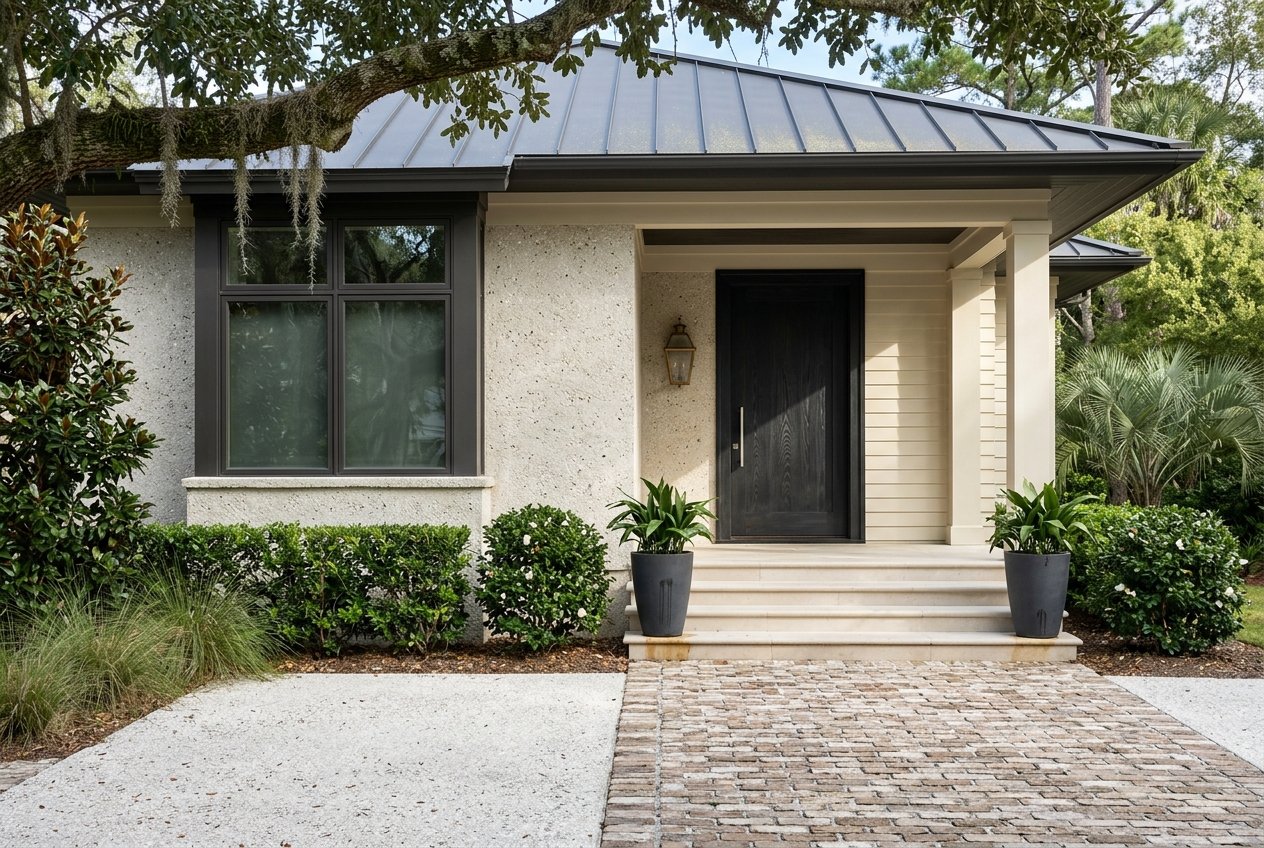
Architecture is a major part of the Palmetto Bluff value story. The community’s design approach emphasizes Lowcountry traditions such as porches, raised foundations, wraparound verandas, detached secondary structures, and design oversight that preserves a consistent regional character.
That architectural pedigree can support stronger positioning when the home feels authentic to its location. It also helps explain why two homes with similar size may perform differently if one has stronger curb appeal, better outdoor flow, or more cohesive design. Buyers here are often purchasing a lifestyle expression as much as a structure.
Functionality still matters
Luxury buyers still care about how a home lives day to day. Current buyer-facing community content highlights features like screened porches, courtyards, docks, outdoor kitchens, pools, spas, guest houses, office space, and multiple fireplaces. These are not just nice extras. They help shape whether a home feels move-in ready for the way buyers want to use it.
Flexibility can matter too. Some offerings in the community have emphasized furnished presentation, lock-and-leave convenience, and negotiable membership features in select cases. Depending on the property, these details can widen the buyer pool and strengthen the home’s market position.
What current market data says
Inventory is tight
The 2025 Palmetto Bluff recap reported that only 4.7% of privately owned homes were listed for sale at any given time. It also noted 45 active resale listings averaging $3.52 million and 12 active homesite listings averaging $901,000. That is not the profile of an oversupplied market.
Tight inventory usually supports stronger pricing discipline, but it does not mean every listing can stretch beyond reason. In a sophisticated luxury community, buyers still compare choices carefully. Limited supply helps, yet condition, location, and presentation still decide which homes gain momentum.
Demand remains focused
Community reporting for 2025 showed that River Road and Moreland Forest together accounted for more than half of all transactions. That suggests buyers were especially drawn to high-amenity, riverfront, and forest-oriented settings. If your home aligns with those preferences, your positioning strategy should bring that to the front.
Momentum also carried into early 2026. January recorded 13 home closings totaling $42.1 million, an average resale price of $3.2 million, and pending volume across homes and homesites of $63.2 million. Those numbers point to active demand and serious buying intent at the upper end of the market.
New construction is part of the competition
Resale homes in Palmetto Bluff do not compete only with other resales. New supply matters here. The Grove in Moreland Forest, the final offering of eight Montage Residences, and other builder-led opportunities give buyers alternatives when they compare convenience, finish level, and timeline.
That means your price needs to reflect the full field of competition. A buyer deciding between your resale and a newer product may weigh updates, design style, furnishings, maintenance expectations, and ease of ownership. Smart pricing acknowledges those alternatives instead of ignoring them.
How to price a luxury home well
Use true substitutes, not broad averages
A community-wide average sale price is helpful context, but it is not a pricing strategy. In Palmetto Bluff, a river-oriented home, a golf-adjacent home, and an interior cottage can sit in very different demand lanes. Your home should be priced against the nearest substitute with a similar setting, design language, lot type, and lifestyle appeal.
You should also look at both sold properties and active competition. A recent sale helps define what buyers have been willing to pay, while current listings show what they can choose right now. In a market with luxury buyers, that active comparison often matters just as much as the sold data.
Respect the first weeks on market
Early exposure is especially important when inventory is thin and motivated buyers are watching closely. The combination of low listing availability and strong pending volume suggests that the first wave of interest can be meaningful. If a home enters the market at a price that feels out of step, you may lose that advantage.
Luxury buyers often notice when a property sits. One recent sale in the broader mix of reported transactions showed a home selling after 584 days on market and 8% under list price. That does not mean every longer listing will follow the same path, but it is a useful reminder that overpricing can become expensive.
Build a pricing story buyers can understand
In luxury real estate, price works best when it feels justified. Buyers want to see why a property is positioned where it is. That story should connect the home’s setting, architecture, outdoor living, privacy, condition, and convenience in a clear way.
If the home has a compelling location within the Bluff, that should lead the message. If the architecture is especially strong or the floor plan fits how buyers live today, that should support the number. A well-positioned luxury listing does not ask buyers to guess at value.
How to position the listing for the right buyer
Lead with setting
The community itself sells a sense of place first. That is a smart cue for sellers. If your home offers marsh views, water orientation, preserve adjacency, walkability, or strong privacy, those benefits should shape the opening message and visual presentation.
In Palmetto Bluff, buyers are often choosing between lifestyle experiences, not just bedroom counts. The listing should immediately answer a simple question: what is it like to own and live here? When that is clear, the home becomes easier to remember and easier to value.
Follow with architecture
Once the setting is established, architecture should reinforce the home’s identity. Is it classic Lowcountry? Is it more contemporary and indoor-outdoor in feel? Does it have the kind of porches, verandas, detached spaces, or proportions that buyers expect in this community?
Those details help attract the right audience. They also help prevent wasted showings from buyers whose taste does not match the property. Strong positioning is not about appealing to everyone. It is about speaking clearly to the buyer most likely to act.
Finish with functionality
After setting and style, practical use should complete the picture. Buyers respond to homes that make daily life and entertaining feel easy. Outdoor kitchens, guest houses, office space, pools, spa features, screened porches, and turnkey convenience can all strengthen your listing narrative when they are present.
This is where publication-quality marketing matters. Professional photography, thoughtful staging, and precise listing copy can help buyers understand the flow, not just the finishes. In a market like Palmetto Bluff, details influence perception quickly.
Common pricing mistakes to avoid
Comparing across unlike homes
One of the biggest mistakes is using a sale from a different micro-market or lifestyle profile as the benchmark. A home in a more private country setting may not track with one in a more walkable village setting. Even inside the same community, the substitute set must be tight.
Ignoring new inventory
Another mistake is pricing as if new construction does not exist. Buyers may compare your listing with newer built-for-sale opportunities, especially if they want a more turnkey experience. Your strategy should account for that reality from day one.
Letting upgrades overshadow context
High-end finishes matter, but they do not erase location differences. A beautifully updated interior may help your home compete better, yet setting still tends to drive value first in Palmetto Bluff. Buyers usually pay the strongest premiums for where the home sits and how it lives within the community.
Why expert local guidance matters
Palmetto Bluff rewards precision. The market is tight, but it is also layered. Sellers need a clear read on micro-market demand, current competition, new supply, and the narrative that will resonate with likely buyers.
That is where a boutique, advisor-led approach can make a difference. With tailored pricing analysis, publication-grade marketing, and concierge-level execution, you can present the home in a way that feels both credible and compelling. In a community where details drive outcomes, strategy matters.
If you are thinking about selling in Palmetto Bluff, the right plan starts with honest positioning, not guesswork. For a tailored pricing and marketing strategy built around your property’s specific strengths, connect with Thomas Kersey.
FAQs
What affects luxury home pricing in Palmetto Bluff most?
- The biggest factors are usually setting, water or preserve orientation, privacy, lot size, architecture, proximity to amenities, and how well the home matches the lifestyle a likely buyer wants.
How should sellers compare comps in Palmetto Bluff?
- Sellers should compare their home to the closest substitute in the same micro-market and with a similar setting, design style, and use profile rather than relying on broad community or Bluffton averages.
Do resale homes compete with new construction in Palmetto Bluff?
- Yes. Resale homes compete with other resales as well as newer offerings such as built-for-sale enclaves and branded residential products inside the community.
Why is pricing early so important for Palmetto Bluff listings?
- Tight inventory and active pending volume suggest that the first weeks on market can capture serious buyers, so an accurate launch price helps preserve momentum.
What should a Palmetto Bluff luxury listing highlight first?
- The strongest listing strategy usually leads with the home’s setting, then its architecture, then the functional features that support indoor-outdoor living and day-to-day ease.
Is Palmetto Bluff priced above the broader Bluffton market?
- Yes. The 2025 average resale price in Palmetto Bluff was $2.95 million, which is far above broader Bluffton median sale price figures reported for spring 2026.